
Let's Break it down
What are we trying to do?
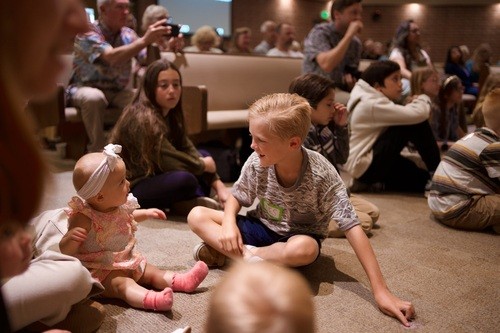
INVITING
Not coercion or criticism, but simple invitation to the life God offers.
ALL PEOPLE
Everyone, everywhere, no matter what.
TO GROW INTO
Because no one has it all figured out, just yet.
A CHRIST-CENTERED LIFE
So that we increasingly reflect the character of Jesus.
IN GOD's family
Life happens best in community.
OUR STRATEGY
How are we doing it?

On Sundays at 9 & 10:45am we look up together in worship - we sing, pray, and celebrate the good news of God’s love
Throughout the week we lean in to community – encouraging and caring for one another – as we grow in Jesus

Being led by God's Spirit, we seek lead out - we want to join God in His work, bringing hope and healing to our hurting world
We believe that regular corporate worship, the accountability of a life-group, and selfless service will lead to Christ-centered transformation
What we teach
You don't have to believe everything we believe to join us!
PURPOSE
The great purpose toward which each human life is drawn is to glorify God and to enjoy Him forever.
(Isaiah 43:7, 1 Corinthians 10:31, Psalm 16:11)
(Isaiah 43:7, 1 Corinthians 10:31, Psalm 16:11)
AUTHORITY
We glorify God by recognizing and receiving His authoritative self- revelation, both in the infallible Scriptures of the Old and New Testaments and also in the incarnation of God the Son.
(2 Timothy 3:16, Hebrews 1:1-2, John 1:14)
(2 Timothy 3:16, Hebrews 1:1-2, John 1:14)
THE TRINITY
With Christians everywhere, we worship the only true God—Father, Son, and Holy Spirit—who is both one essence and three persons.
(Matthew 28:19, 2 Corinthians 13:14)
(Matthew 28:19, 2 Corinthians 13:14)
JESUS
Jesus Christ is both truly God and truly human.
(John 1:1, Colossians 2:9)
The divinity of the Son is in no way impaired, limited, or changed by His gracious act of assuming a human nature, and that His true humanity is in no way undermined by His continued divinity.
(Philippians 2:6-7)
Jesus, who was sent from the Father, has now ascended to the Father in His resurrected body and remains truly human.
(Acts 1:9, Hebrews 7:24-25)
We are able to confess Jesus Christ as Lord and God only through the work of the Holy Spirit.
(1 Corinthians 12:3)
(John 1:1, Colossians 2:9)
The divinity of the Son is in no way impaired, limited, or changed by His gracious act of assuming a human nature, and that His true humanity is in no way undermined by His continued divinity.
(Philippians 2:6-7)
Jesus, who was sent from the Father, has now ascended to the Father in His resurrected body and remains truly human.
(Acts 1:9, Hebrews 7:24-25)
We are able to confess Jesus Christ as Lord and God only through the work of the Holy Spirit.
(1 Corinthians 12:3)
GRACE
The present disordered state of the world, in which we and all things are subject to misery and to evil, is not God’s doing, but is rather a result of humanity’s free, sinful rebellion against God’s will.
(Romans 3:23)
No part of human life is untouched by sin. Our desires are no longer trustworthy guides to goodness, and what seems natural to us no longer corresponds to God’s design.
(Romans 5:12)
In union with Christ through the power of the Spirit we are brought into right relation with the Father, who receives us as His adopted children.
(Romans 8:15)
Jesus Christ is the only Way to this adoption, the sole path by which sinners become children of God.
(John 14:6, Ephesians 1:5)
(Romans 3:23)
No part of human life is untouched by sin. Our desires are no longer trustworthy guides to goodness, and what seems natural to us no longer corresponds to God’s design.
(Romans 5:12)
In union with Christ through the power of the Spirit we are brought into right relation with the Father, who receives us as His adopted children.
(Romans 8:15)
Jesus Christ is the only Way to this adoption, the sole path by which sinners become children of God.
(John 14:6, Ephesians 1:5)
SALVATION
Having lost true freedom of will in the fall, we are incapable of turning toward God of our own volition. God chooses us for Himself in grace before the foundation of the world, not because of any merit on our part, but only because of His love and mercy.
(Ephesians 2:8-9, John 6:44)
Through His regenerating and sanctifying work, the Holy Spirit grants us faith and enables holiness, so that we may be witnesses of God’s gracious presence to those who are lost.
(Titus 3:5, 2 Thessalonians 2:13)
(Ephesians 2:8-9, John 6:44)
Through His regenerating and sanctifying work, the Holy Spirit grants us faith and enables holiness, so that we may be witnesses of God’s gracious presence to those who are lost.
(Titus 3:5, 2 Thessalonians 2:13)
THE CHURCH
In Christ, we are adopted into the family of God and find our new identity as brothers and sisters of one another, since we now share one Father.
(Ephesians 2:19, 1 Corinthians 12:12-13)
Within the covenant community of the church, God’s grace is extended through the preaching of the Word, the administration of the Sacraments, and the faithful practice of mutual discipline.
(Acts 2:42, Matthew 18:15-17)
(Ephesians 2:19, 1 Corinthians 12:12-13)
Within the covenant community of the church, God’s grace is extended through the preaching of the Word, the administration of the Sacraments, and the faithful practice of mutual discipline.
(Acts 2:42, Matthew 18:15-17)
LEADERSHIP
The ministries of the church reflect the three-fold office of Christ as prophet, priest, and king – reflected in the church’s ordered ministries of teaching elders, deacons, and ruling elders.
(1 Peter 2:9, Ephesians 4:11-12)
We affirm that men and women alike are called to all the ministries of the Church, and that every member is called to share in all of Christ’s offices within the world beyond the church.
(Galatians 3:28)
Jesus teaches us that we are to love the Lord our God with all our heart, with all our soul, and with all our mind. There is no part of human life that is off limits to the sanctifying claims of God.
(Matthew 22:36-40)
(1 Peter 2:9, Ephesians 4:11-12)
We affirm that men and women alike are called to all the ministries of the Church, and that every member is called to share in all of Christ’s offices within the world beyond the church.
(Galatians 3:28)
Jesus teaches us that we are to love the Lord our God with all our heart, with all our soul, and with all our mind. There is no part of human life that is off limits to the sanctifying claims of God.
(Matthew 22:36-40)
OBEDIENCE
Progress in holiness is an expected response of gratitude to the grace of God, which is initiated, sustained, and fulfilled by the sanctifying work of the Holy Spirit.
(1 Thessalonians 4:3, Philippians 2:12-13)
(1 Thessalonians 4:3, Philippians 2:12-13)
MARRIAGE
We teach that we are to maintain chastity in thought and deed, being faithful within the covenant of marriage between a man and a woman as established by God at the creation or embracing a celibate life as established by Jesus in the new covenant.
(Hebrews 13:4, Genesis 2:24, 1 Corinthians 7:7-8)
(Hebrews 13:4, Genesis 2:24, 1 Corinthians 7:7-8)
FAQ's
Frequently Asked Questions
WHAT DO PRESBYTERIANS BELIEVE?
At the center of Presbyterian belief is the good news of Jesus Christ. We believe that God created us, loves us, and has made a way for us to be reconciled to Him through the life, death, and resurrection of Jesus. Presbyterians affirm the historic teachings of the Christian faith, including the authority of Scripture, salvation by grace through faith, and the call to follow Jesus in every area of life.
WHAT IS REFORMED THEOLOGY?
Good Shepherd is part of the Reformed tradition, a branch of Christianity that grew out of the Protestant Reformation. Reformed theology emphasizes God's sovereignty, the authority of Scripture, salvation by grace alone through faith alone, and God's ongoing work to redeem and restore all things through Jesus Christ. While these ideas shape our teaching, our focus is not on a theological system but on helping people know, love, and follow Jesus.
WHY DO PRESBYTERIANS BAPTIZE INFANTS?
We believe baptism is a sign of God's covenant promises and His grace at work in our lives. Just as children were included in God's covenant family in the Old Testament, we believe the children of believers are also part of God's covenant community today. Infant baptism does not save a child, nor does it replace the need for personal faith in Jesus. Rather, it is a sign of God's promises and the church's commitment to help raise that child in the faith.
DO I HAVE TO AGREE WITH EVERYTHING TO ATTEND?
Not at all. You are welcome at Good Shepherd whether you are a longtime Christian, new to faith, skeptical, or simply exploring. We do not expect visitors to have all the answers or agree with every aspect of our theology. We invite people to come, ask questions, engage in conversation, and discover who Jesus is. Our hope is that Good Shepherd would be a place where you can grow in faith and experience God's love alongside others.
WHAT IS THE DIFFERENCE BETWEEN PRESBYTERIANS AND OTHER CHURCHES?
Like many Christian churches, Presbyterians believe in the authority of Scripture, salvation through Jesus Christ, and the call to love God and our neighbors. What makes Presbyterian churches distinct is our emphasis on God's grace, our commitment to thoughtful biblical teaching, and our practice of shared leadership through elected elders. We also value being rooted in the historic Christian faith while engaging the questions and challenges of today. While every church has its own culture and personality, our goal at Good Shepherd is simple: to help people grow into a Christ-centered life in God's family.
DO I HAVE TO BECOME A MEMBER TO ATTEND?
Not at all. Whether you're exploring Christianity, new to the area, returning to church after time away, or simply curious, you are welcome to attend Good Shepherd. Many people worship with us for weeks or months before deciding whether they would like to become a Covenant Partner. Membership is an opportunity to make a deeper commitment to the life and mission of the church, but it is never a requirement for attending worship services, events, or most ministries.
CAN I TAKE COMMUNION IF I AM NOT PRESBYTERIAN?
Yes. At Good Shepherd, communion is not limited to Presbyterians or members of our church. We invite all who trust in Jesus Christ as their Lord and Savior to receive communion with us. If you are still exploring faith or have questions about communion, you are welcome to observe and participate as you feel comfortable. We believe the Lord's Table is a gift of God's grace and a reminder of Christ's love for His people.
WHAT IS THE ROLE OF ELDERS AND DEACONS?
Good Shepherd is led through a model of shared leadership that is common in Presbyterian churches. Elders, together with the pastors, provide spiritual leadership, prayer, discernment, and oversight for the life and mission of the church. Deacons focus on ministries of care, compassion, and practical support, helping meet the needs of individuals and families both within our congregation and in the wider community. Together, elders and deacons help us live out Christ's call to shepherd, serve, and care for one another.
WHAT IF I'VE NEVER BEEN TO CHURCH BEFORE?
You are not alone. Every week we welcome people who are attending church for the first time or returning after many years away. You do not need to know the Bible, understand church traditions, or have all your questions answered before you come. We strive to create an environment where people can explore faith, encounter God, and learn at their own pace. Wherever you are on your spiritual journey, you are welcome here.
HOW CAN I GET CONNECTED AT GOOD SHEPHERD?
One of the best ways to get connected is simply to start showing up. Join us for worship, stop by the Welcome Table, and introduce yourself to one of our pastors or volunteers. From there, we can help you find opportunities to build relationships through groups, classes, serving teams, and church events. We often encourage new people to "Stick 6"—give Good Shepherd six weeks to get to know us, meet some people, and experience the life of our church before deciding whether this is a place you'd like to call home.
Our Denomination
We are not alone in this...
Our church is a member of ECO: A Covenant Order of Evangelical Presbyterians, a reformed, egalitarian, and Jesus-focused movement of over 400 congregations and church plants. Click below to learn more.